
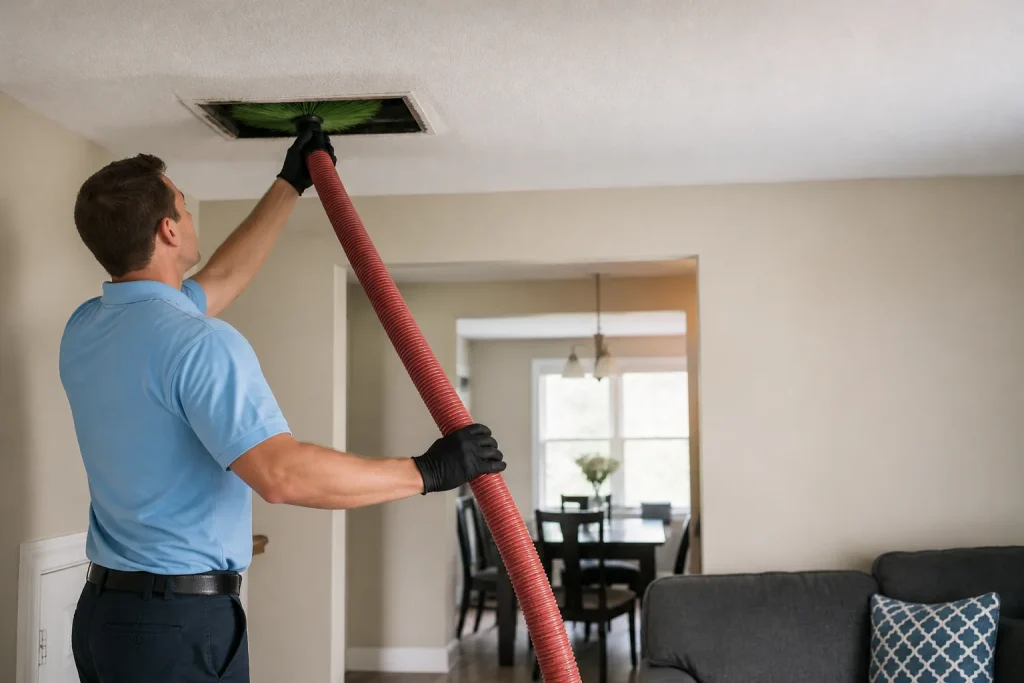
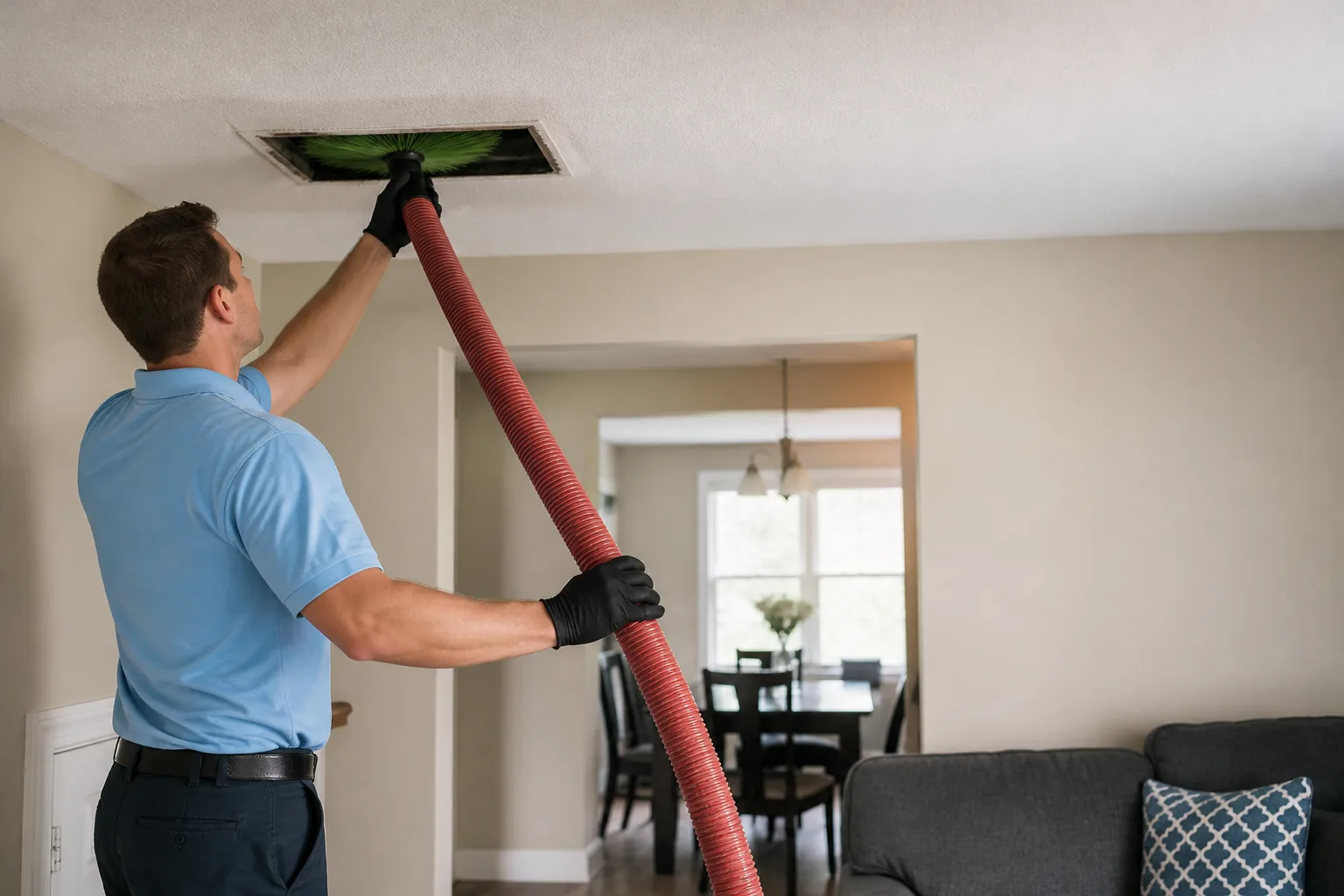
Nikro Air Duct Cleaning in Sunnyside: A Homeowner’s Guide
Any company can rent a Nikro vacuum. Almost none of them follow the negative-pressure protocol that makes the equipment actually do its job. That gap between owning the logo and running the process is where most “professional duct cleaning” in Sunnyside falls apart, and it’s the reason two neighbors can pay similar prices and get wildly different results. This guide explains what Nikro equipment is built to do, how a proper job should look, and the questions that separate a real technician from a guy with a hose.
If you’d rather not sort through it yourself, call (877) 792-6029 and we’ll walk you through what a proper cleaning involves for your home.
What Is Nikro Equipment, Exactly?
Nikro builds portable source-removal vacuums designed around NADCA specifications for duct cleaning. In plain terms: these are high-CFM vacuums meant to pull debris out of a duct system under controlled negative pressure, not scatter it into your living room. They’re the same category of equipment used by HVAC and restoration professionals, which is why the name carries weight.
What Nikro equipment is not is a service guarantee. A vacuum sitting in a van proves nothing about whether the technician will use it correctly. We’ve seen plenty of operators who own the right machine and still skip the steps that make it work, because those steps take time and a machine alone doesn’t enforce anything.
The equipment matters. So does what happens around it:
- The vacuum itself creates negative pressure in the duct system so loosened debris travels toward the collection unit.
- Agitation tools (brushes, air whips, rotary heads) dislodge debris stuck to duct walls. Without agitation, the vacuum pulls only what’s already loose.
- Containment keeps the work area protected. Companies using Abatement Technologies containment aren’t just tidy; they’re following a contamination-control discipline borrowed from mold remediation.
In Sunnyside, where a lot of homes still run the original ductwork from decades past, that combination matters more than a brand name on a truck.
Why Negative Pressure Is the Whole Point
Negative pressure means the vacuum pulls air (and debris) toward the collection point instead of letting it escape into rooms. When it’s set up correctly, dust stays in the system until it’s captured. When it’s not, you get a light coating of everything that was in your ducts settling across your furniture. That’s the difference between cleaning and redistributing.
The process Nikro equipment is designed for looks like this:
- Connect the vacuum to the main trunk at a strategic access point, creating a pressure differential across the whole system.
- Seal every other opening so air has to come through the ducts, not around them.
- Work section by section, agitating each run with a brush or whip while the vacuum pulls.
- Capture debris at the source with HEPA-level filtration on the collection unit.
- Document the work before and after, so the homeowner can see the difference.
Skip step two or step three and the vacuum is running but the ducts aren’t getting clean. This is where the “blow-and-go” crowd cuts corners. The machine is on, the meter is running, and the job isn’t done. If you’re in Sunnyside and a technician won’t explain their pressure setup, that’s your first clue.
How Do You Verify the Equipment Is Being Used Correctly?
You don’t need a certification to ask good questions. A legitimate technician will answer these without hesitation. Someone cutting corners tends to get vague.
- “Where are you connecting the vacuum, and where are the access points?” A real answer names specific locations: the trunk line, the plenum, or a return near the air handler. Vague answers mean they haven’t planned the job.
- “What’s the CFM rating on the vacuum?” CFM (cubic feet per minute) is a measure of airflow. Higher isn’t automatically better, but a technician who knows their number understands what the machine can and can’t pull through a given duct size.
- “Will you use containment while you work?” The answer should be yes, and they should be able to describe what that looks like in your home.
- “Which runs get agitated, and with what tools?” Every branch. If they say “the main trunks are enough,” that’s not a cleaning, that’s a partial job.
- “Will I see photos of the duct before and after?” Documentation is part of the process, not a favor.
We show our work for exactly this reason. In Sunnyside, where neighbors talk and word travels, the only reputation worth building is one backed by photos and a straight answer.
When to call a pro: if you’re not sure what’s involved in your specific system, or if you’ve had work done before and want it verified, call (877) 792-6029. We’ll give you a free estimate and a clear explanation of what we’d actually do.
How Does Sunnyside’s Older Housing Stock Affect the Job?
Sunnyside’s housing stock was largely built before 1980, and that matters for how Nikro equipment gets deployed. Many of these homes have a mix of original galvanized steel ductwork and later flex duct additions from renovation projects. Each type demands a different approach.
Galvanized steel ductwork takes mechanical agitation well. A rotary brush can scrub the walls without much risk. The seams and joints, though, tend to accumulate decades of dust and often develop small gaps that let air (and debris) escape. Cleaning without sealing gives you a clean duct that starts collecting again from the leaks.
Pre-1980 flex duct is the trickier material. It’s more fragile; aggressive brushing can tear the liner or shred the internal support. A technician working properly will use gentler agitation here and a lower suction setting, so the vacuum pulls without collapsing the run. If a company treats every duct like steel, they’ll finish in record time and leave you with ductwork that needs replacing.
In Sunnyside, we also see plenty of ducts that were retrofitted around existing construction – added returns with awkward bends, short runs behind kitchen cabinets, and connections that were never quite sealed. Those are the places Nikro equipment genuinely earns its keep, because a properly set up negative-pressure vacuum reaches the runs a shop-vac-and-hose setup can’t. If you’re thinking about air duct cleaning, ask how the technician will handle the mix of materials in your home.
What Questions Should You Ask Before Booking?
A short list of questions, asked before anyone shows up, saves a lot of frustration. It also tells you whether the company you’re talking to treats Nikro as a tool or a marketing badge.
- Are you using Nikro or equivalent professional-grade equipment, and can you describe the setup? Not just “we use Nikro” – the process.
- Will you agitate every branch, or only the main trunks? Every branch. No exceptions.
- What containment protects my home during the job? The answer should mention something specific (drop cloths, negative-pressure containment, HEPA filtration).
- Do you clean the air handler and blower, or only the ducts? Skip the air handler and you’ve left a debris source where the ducts start.
- Will I get before-and-after photos of my actual ducts? Not stock images.
- Do you also handle sealing and repair? Root-cause work is the difference between a one-time clean and a system with long-term health.
We tend to mention HVAC cleaning in the same breath as duct cleaning because the two are inseparable. A dirty blower behind clean ducts is a job half done.
Related services in Sunnyside: we also offer dryer vent cleaning, which is worth scheduling the same visit. Dryer vents clogged with lint are the leading cause of dryer fires, and the same containment discipline applies. Two birds, one van.
What Should You Expect From a Proper Cleaning?
When the job is done right, here’s the rough shape of it. A technician arrives, walks the system with you, and gives you a flat price per system before any work starts. No per-vent pricing, no surprise line items halfway through. Then containment goes up, the vacuum gets connected at the trunk, other openings are sealed, and each branch gets agitated in turn. Photos get taken. The equipment comes down, containment comes out, and you’re shown what was pulled from your ducts.
Nikro equipment makes that job possible. It doesn’t make it happen on its own. The protocol is what cleans the ducts; the vacuum is the tool the protocol requires. Companies that lead with the brand name and skip the process are hoping you won’t know the difference. Now you do.
Our technicians have up to 9 years of experience working with Rotobrush and Nikro equipment, plus Abatement Technologies containment on every job, and we’re familiar with Honeywell and Aprilaire systems for the air-quality side of the equation. Whether your priority is Sunnyside Air Duct Cleaning or a full indoor air-quality upgrade, the process is the same: clean, verify, document, improve.
The Bottom Line
Nikro equipment is a benchmark, not a warranty. The brand tells you a company invested in professional-grade tools; the protocol tells you whether they know how to use them. Negative pressure, agitation, containment, and documentation are the four things that turn a duct cleaning into a duct cleaning, and any one of them missing turns it into a cosmetic service. If a company can describe their setup without blinking, they know what they’re doing. If they can’t, you now know what to ask.
If you’re in Sunnyside and need help, Sunnyside Air Duct Cleaning offers free estimates. Call (877) 792-6029. We answer 24/7. Fast dispatch from 7am to 7pm, Sunday through Friday.
Frequently Asked Questions
Nikro builds portable source-removal vacuums to NADCA specifications, which places them in a different category than consumer-grade or shop-vac equipment. They’re purpose-built for high-CFM negative-pressure duct cleaning. The equipment is better; whether the job is done right still depends on the technician running it.
Most whole-home cleanings take two to four hours, depending on the number of runs and how much flex duct is involved. Sunnyside’s older homes often mix steel and flex, which adds time. A company quoting under an hour for a full system isn’t doing the job properly.
No. With proper containment and a well-sealed vacuum, dust stays in the system. You can stay home while the work happens. That said, if anyone in the household has severe allergies or asthma, staying out of the immediate work area during the cleaning is a reasonable precaution.
Low quotes usually mean one of two things: per-vent pricing that balloons once the technician arrives, or a “blow-and-go” where the vacuum runs but no branch gets agitated. A proper cleaning is priced as a flat price per system, agreed before work starts, with before-and-after photos to prove it was done. If the quote seems too good, ask what’s included. Then ask what isn’t. Call (877) 792-6029 for an honest estimate and a clear scope.
Written by the team at Sunnyside Air Duct Cleaning.
Need Air Duct Cleaning Help?
Call Sunnyside Air Duct Cleaning - the local pro we connect you with is licensed and insured, with free written estimates in Sunnyside.
(877) 792-6029